
Every parent who has ever stood at a nursery door, watching their child walk in for the first time, knows the feeling. The hope that their child will be alright. The quiet question underneath it all: will they be and feel safe here?
That question matters more than most people realise. Emotional security — a child’s felt sense of safety, belonging, and trust in the adults around them — is not a soft extra in early education and care. It is the foundation on which everything else is built. A child who feels emotionally secure explores more freely, concentrates more deeply, communicates more openly, and develops more fully. A child who does not feel secure cannot access any of those things, regardless of how rich the learning space around them may be.
The best nursery schools understand this. They do not treat emotional wellbeing as a pastoral concern that sits alongside the “real”, often considered academic, work of education. They treat it as t the primary condition that makes all other learning possible.
At FinlandWay®, emotional security sits at the very heart of our curriculum and methodology, rooted in Finland’s world-leading approach to early childhood education and care. Creating a learning community where all children (and adults alike) feel safe and belonging is and important part of the training programme and quality assessment.
What is emotional security — and why does it matter in the early years?
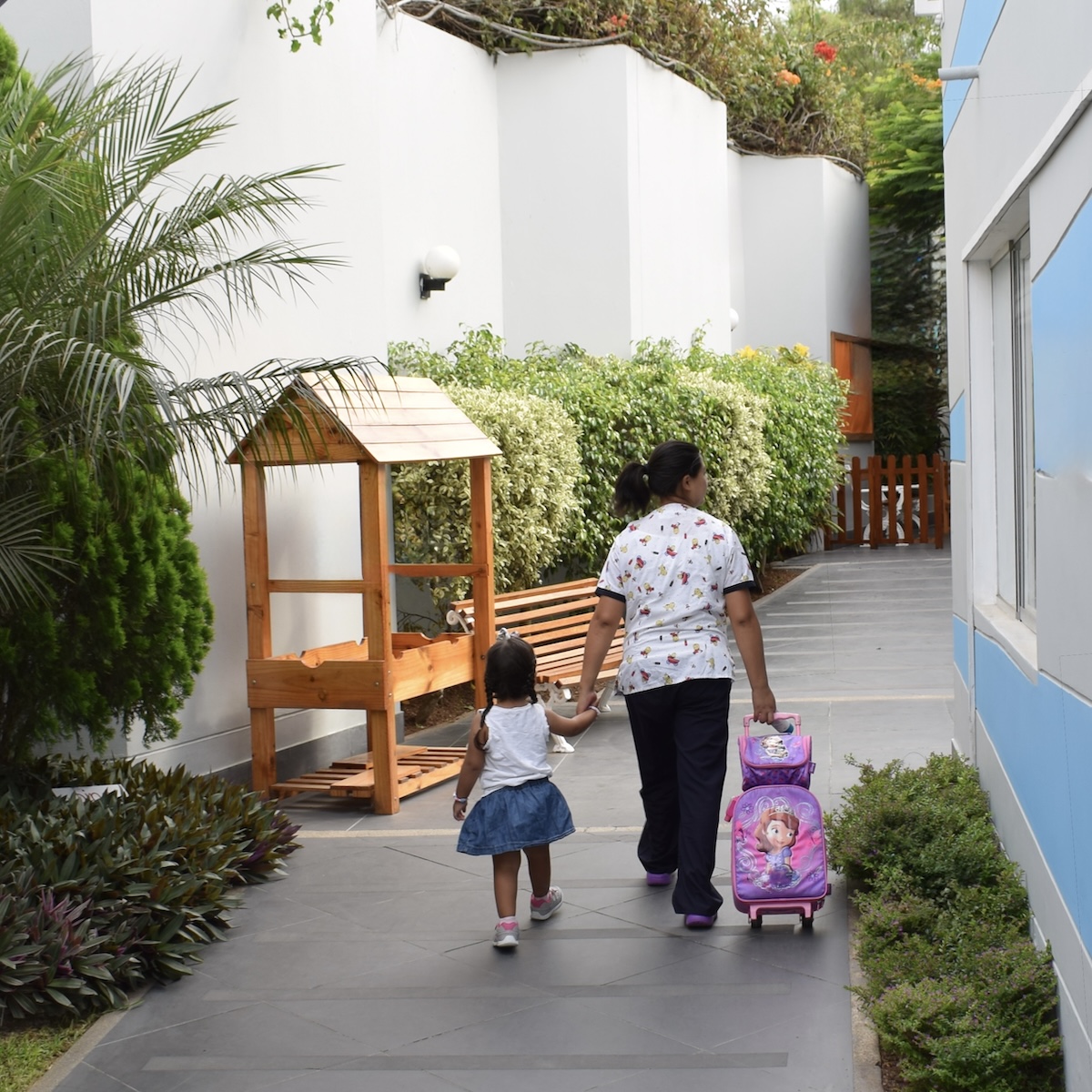
Emotional security, in the context of early childhood, refers to a child’s felt sense that they are safe, that they are valued, and that the adults around them can be trusted to respond to their needs. It is the experience of having a reliable emotional base from which to explore the world. Developmental psychologist John Bowlby called this a secure base.
When a child has that secure base, they become genuinely adventurous, they try new things, tolerate frustration, recover from setbacks, and engage with curiosity rather than anxiety. Their energy is freed up for learning because it is no longer consumed by vigilance.
The years between birth and six are the critical window in which a child’s emotional architecture is formed. The quality of relationships and environments they experience during this time shapes their capacity for emotional regulation, empathy, resilience, and trust well into adult life. Nursery schools sit directly in the middle of this window. What they do with that responsibility defines the kind of early childhood education they truly offer.
UNICEF’s framework on early childhood development identifies emotional wellbeing as a foundational pillar of healthy development — one that cannot be separated from cognitive, physical, or social growth. UNICEF on emotional wellbeing in early childhood.
The link between emotional security and learning
There is a tendency in early education to separate wellbeing from learning and to treat them as two distinct goals that must somehow be balanced against each other. The science does not support this distinction. Emotional security is not separate from learning readiness, rather, it is its prerequisite.
When a child experiences stress, whether from an unfamiliar environment, an inconsistent relationship, or a sense of not belonging, their brain activates a stress response that prioritises survival over exploration. The areas of the brain responsible for curiosity, memory, language, and problem-solving are effectively sidelined. A child in a state of emotional insecurity is a child whose capacity to learn has been significantly diminished, regardless of what is being offered to them.
Conversely, a child who feels genuinely safe, who trusts their educator, understands their environment, and feels that they belong, is a child whose brain is fully available for learning. They concentrate for longer, take more risks, ask more questions, and engage more deeply with everything around them. Emotional security does not compete with academic development, it is what makes it possible.
Harvard’s Centre on the Developing Child has shown that prolonged activation of the stress response in early childhood — what they call toxic stress — can disrupt the development of brain architecture in ways that affect learning, behaviour, and health for years to come. Harvard Centre on the Developing Child — toxic stress.
How the best nursery schools build emotional security
Emotional security in nursery schools does not happen by accident. It is the result of deliberate, consistent choices in how environments are designed, how educators are trained, how routines are structured, and how relationships are built. Here are the core strategies that distinguish genuinely emotionally secure nursery schools from those that simply aspire to be.
Warm, consistent relationships with key adults
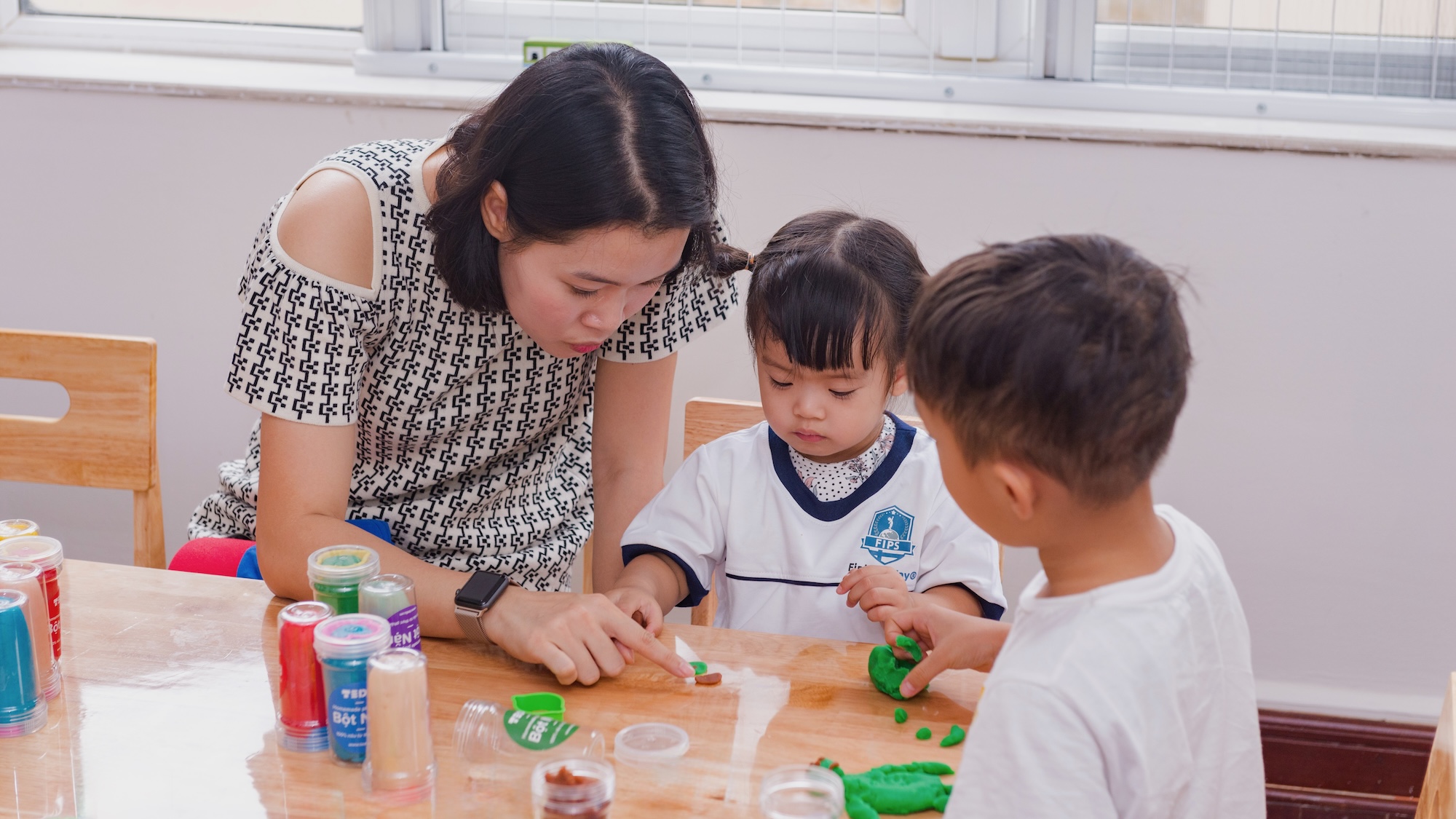
The single most important factor in a young child’s emotional security at nursery is the quality and consistency of their relationship with a key adult. This is not a matter of general warmth or likability, but rather it is about specific, sustained, reliable connection. A child who knows that there is one person who truly knows them, who notices when they are tired or unsettled, who remembers their preferences and their stories, has a secure base from which to engage with everything else the nursery offers.
The key person approach, in which every child is assigned a named educator who takes primary responsibility for their emotional wellbeing and daily care, is a cornerstone of quality early years practice. In the FinlandWay® programme, this is not a bureaucratic assignment. It is a pedagogical commitment, supported by training that helps educators build genuinely meaningful relationships with the children in their care.
The Anna Freud Centre’s early years resources highlight the key person relationship as the most significant protective factor available to young children in nursery settings — with lasting benefits for attachment, regulation, and school readiness. Anna Freud Centre on the key person approach →
Predictable routines and a sense of order
For young children, predictability is a form of safety. When the structure of their day is reliable and comprehensible and a child can anticipate what will happen next their nervous system can relax. Anxiety thrives in uncertainty. Routine is its antidote.
The best nursery schools design their daily rhythm with emotional security explicitly in mind. Consistent arrival rituals, predictable transitions, regular mealtimes, and familiar closing routines all communicate the same message to a young child: this place is safe, this place is knowable, and the adults here can be trusted to hold things steady. In the FinlandWay® daily structure, routine is not rigidity. It is the reliable framework within which children feel free to explore, take risks, and be themselves and where learning focus changes from more structured and teacher-led activities to child-led exploration.
A physically and emotionally safe environment
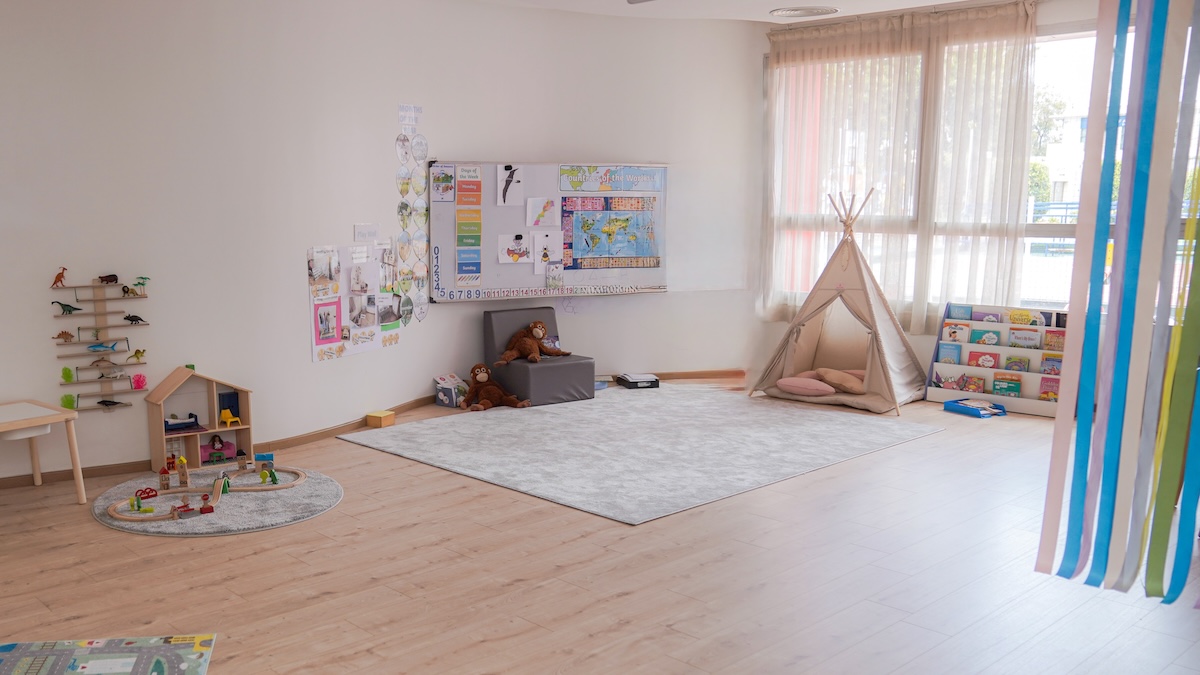
Physical safety in nursery schools is understood and regulated. Emotional safety is less often explicitly designed for — and yet it is equally essential. An emotionally safe environment is one in which children can express difficult feelings without fear of shame or punishment, make mistakes without humiliation, ask for help without anxiety, and be exactly where they are developmentally without being rushed or compared.
The physical environment also communicates emotional safety in ways that are subtle but powerful. Calm colours, natural materials, soft spaces for withdrawal, and clearly organised resources all reduce sensory overwhelm and communicate care. The FinlandWay® environment design guidelines ensure that partner school classrooms are intentionally constructed to feel safe, welcoming, and genuinely child-centred. The design is not just aesthetically pleasing, but created children’s needs in mind.
Emotionally literate teaching practices
Children learn so called emotional literacy, the ability to name, understand, and manage their feelings, primarily by experiencing it modelled and reflected back to them by the adults in their lives. An educator who names emotions clearly, validates a child’s experience without dismissing or amplifying it, and models calm self-regulation in their own behaviour is one of the most powerful emotional development tools a nursery school can offer.
This is a trained skill. Emotionally literate teaching requires specific knowledge, intentional practice, and a professional culture that values emotional attunement as a core competency. FinlandWay® educator training dedicates significant focus to this dimension of professional practice, equipping educators to respond to children’s emotional lives with the skill and sensitivity that genuine wellbeing support demands.
CASEL’s foundational research confirms that the quality of adult-child emotional interaction in early education is one of the strongest predictors of children’s social-emotional development — more significant than curriculum content alone. CASEL on social-emotional learning in early childhood
Play as an emotional processing tool
Play is how children make sense of their world. Children routinely use play to re-enact experiences that have confused or frightened them, to rehearse scenarios they are anticipating with anxiety, and to work through emotions that they do not yet have the language to express directly. The child who plays out a hospital visit with dolls, or acts out a goodbye with toys, is not simply playing — they are processing.
Nursery schools that prioritise rich, open-ended play give children access to their most natural and powerful emotional processing tool. When play is genuine, unhurried, and child-led it becomes a space of genuine emotional work as well as joyful exploration. FinlandWay® programme dedicates time for child-led play and exploration and itäs one of the key elements of the curriculum.
Parental partnership and transitions
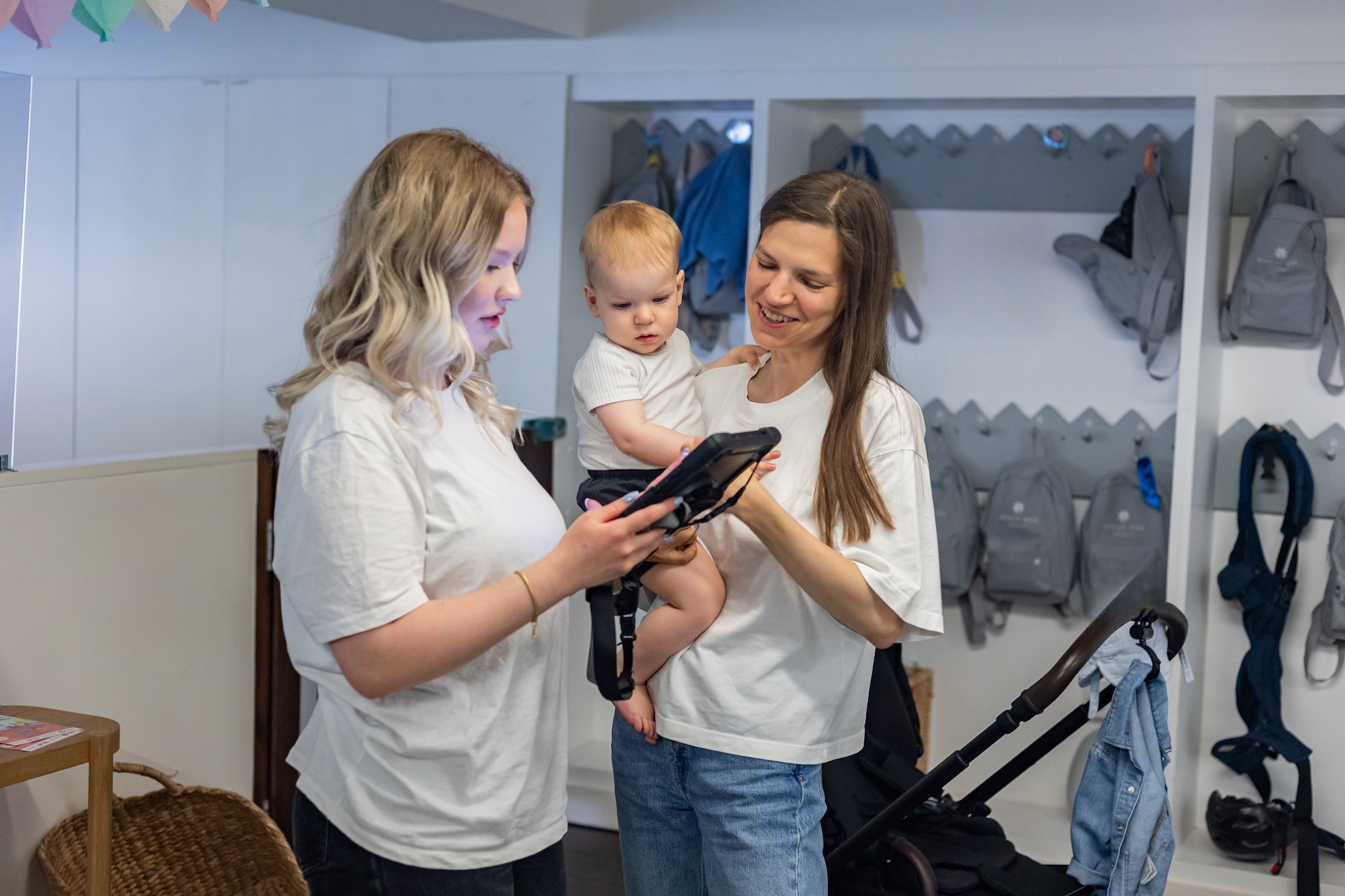
Emotional security at nursery does not begin at the nursery door. It begins at home, in the conversations parents have with their children about what to expect, and it is reinforced by the quality of communication between families and educators every day. The best nursery schools invest in this partnership deliberately including thoughtful settling-in processes, regular and meaningful communication, and a genuine culture of welcome for families.
Transitions, such as arrival, departure, moving between rooms or stages, are the moments when children’s emotional security is most visibly tested, and where attentive nursery schools make the greatest difference. The FinlandWay® parent insights platform provides families with regular visibility into their child’s day, their wellbeing, and their development — keeping parents connected and confident, and extending the emotional security of the nursery environment into the home.
The Finnish approach to emotional wellbeing in nursery schools
Finland’s National Core Curriculum for Early Childhood Education and Care is unusual in one important respect: it places the wellbeing and emotional security of the child as the primary goal of early education — not a support function, not a pastoral layer, but the central purpose around which everything else is organised.
Finnish early childhood educators are trained to see themselves first as builders of secure, trusting relationships. The curriculum, the activities, and the learning environments are all designed to serve this primary goal. The result is a generation of children who enter formal schooling with a deep sense of their own worth, a genuine love of learning, and the emotional resilience to navigate challenge and change with confidence.
These outcomes are not accidental. They are the product of decades of investment in a system that takes seriously what research has always shown: that emotional security in the early years is the single most powerful foundation for lifelong wellbeing and success. FinlandWay® brings this philosophy — its principles, its practices, and its standards — to partner nursery schools around the world.
Finland’s National Agency for Education enshrines emotional wellbeing as a core goal of early childhood education and care at a national curriculum level — making it a system-wide commitment, not an individual school choice. Finnish National Agency for Education — ECEC curriculum
Why emotional security is a business priority for nursery school owners
For nursery school owners and operators, emotional security should be an educational and commercial priority. The families who choose your school and stay with it are, above all, families whose children are visibly happy and settled. A child who arrives at nursery with confidence, who separates from parents without distress, and who comes home with stories to tell is a child whose family becomes your most powerful advocate.
The inverse is equally true. A nursery school where children are persistently unsettled, where parents feel shut out, or where emotional wellbeing is treated as secondary to academic programming will struggle with retention, reputation, and staff morale, regardless of how impressive the rest of the curriculum may be.
Investing in emotional security is one of the highest-return decisions a nursery school can make. It drives enrolment, supports retention, reduces staff turnover, and builds the kind of reputation that money cannot buy: the reputation of a school where children genuinely flourish.
What FinlandWay® delivers for emotional security in nursery schools
FinlandWay® partner schools do not receive only a curriculum. They receive a complete system for building emotionally secure, developmentally rich learning environments, backed by the expertise of Finnish early childhood education specialists and refined across diverse cultural contexts worldwide.
Specifically, for emotional security, FinlandWay® delivers:
A wellbeing-centred curriculum — with emotional security, self-regulation, and social-emotional learning embedded across every age group and every domain — not added on as an afterthought.
Educator training in emotional literacy — equipping your team with the specific interaction skills, language, and professional dispositions that build genuinely secure, trusting relationships with children.
Environment design guidance — helping schools create physical spaces that communicate safety, calm, and belonging to children from the moment they walk through the door.
A parent insights platform — giving families meaningful visibility into their child’s emotional wellbeing and development, and supporting the home-nursery partnership that emotional security depends on.
Ongoing pedagogical support — from a team of Finnish early childhood experts who understand both the research and the realities of implementation across different cultures and contexts.
“Since our son started in the FinlandWay® programme he has started to trust himself more and make his own decisions. He has a very good relationship with his friends and he loves school.” — FinlandWay® Parent
“I would have wanted to benefit from FinlandWay® myself during my preschool, it would have made all the difference.” — FinlandWay® Parent
Ready to build a nursery school where children feel genuinely safe, valued, and ready to grow? Speak with the FinlandWay® team and discover what our programme can deliver for your school and your community.
Enquire about the FinlandWay® programme
Contact the FinlandWay® team directly
What emotionally secure nursery schooling looks like for your child
If you are a parent choosing a nursery school, emotional security should sit at the top of your checklist — above facilities, above location, and above reputation alone. Here is what to look for when visiting and evaluating nursery schools:
- Children look settled and at ease. This doesn’t mean that they stay uniformly quiet, but genuinely comfortable in their environment.
- Educators greet children warmly and by name and children respond with recognition and confidence.
- Transitions are handled with care. Arrival and departure routines should be calm, consistent, and attentive.
- Difficult emotions are welcomed, not managed away. You should see educators responding to upset with patience and presence rather than distraction or dismissal.
- The environment feels calm and organised. Not sterile, but intentional. All walls should not be cluttered with posters and children’s art work.
- Parents are genuinely welcomed as partners in their child’s experience.
- There is space for child-led play and teachers listen to their wishes. Children should have real choice, real time, and real ownership over their activities.
FinlandWay® partner schools are evaluated against these principles as part of our quality assurance framework — giving families confidence that the emotional security they see on a visit day is the standard their child will experience every day.
Looking for a FinlandWay® nursery school for your child? Find your nearest partner school
Internal Link: Top Nursery School Programmes for Early Childhood Development
Emotional security is a foundation for social interaction and learning
A child cannot learn well if they do not feel safe. They cannot form friendships if they do not feel they belong. They cannot develop confidence if they do not feel valued. Emotional security is not a nice-to-have in early childhood education — it is the soil in which everything else grows.
The nursery schools that understand this do not simply offer a caring environment alongside a curriculum. They build their entire programme around the conviction that a child who feels truly safe is a child who can become truly themselves. That conviction is at the heart of Finnish early childhood education, and it is at the heart of every FinlandWay® partner school around the world.
If you are a parent looking for a nursery school that puts your child’s emotional wellbeing first, or a school owner who wants to build something genuinely exceptional for the children in your community, we would love to speak with you.
For families: Find a FinlandWay® school near you →
For schools: Enquire about the FinlandWay® programme →