
Play-based learning outcomes are the metric that matters most to school investors and operators evaluating the Finland early years model. The question is not whether play-based learning feels good — it is whether play-based learning outcomes hold up under scrutiny. Do children in play-based settings perform as well as in traditional preschools? Do the outcomes justify the investment? And how does the evidence translate into commercial advantage for the schools that adopt this approach?
This article sets out the evidence for play-based learning outcomes clearly and concisely, so school investors and operators can make an informed decision about whether the FinlandWay® Finland model is the right framework for their school.
| Related: For the full business case, see the Finland early years model: a business case for school owners & operators |
Play-based learning outcomes: what the evidence shows
The evidence base for play-based learning outcomes is substantial, longitudinal, and drawn from multiple independent research programmes. Here is what the research consistently shows across six key outcome dimensions.
| Outcome dimension | What play-based learning delivers | Key research reference |
|---|---|---|
| Cognitive development | Children in play-based early years settings demonstrate equivalent or stronger cognitive development by age 7, with significant advantages in problem-solving, creative thinking, and executive function. | Sylva, Melhuish, Sammons, Siraj-Blatchford & Taggart (2004). The Effective Provision of Pre-School Education (EPPE) Project: Final Report. DfES. https://dera.ioe.ac.uk/id/eprint/18189/2/SSU-SF-2004-01.pdf |
| Social-emotional development | Play-based learners show significantly stronger outcomes in emotional regulation, empathy, and collaborative behaviour — skills increasingly recognised as predictors of long-term academic and life success. | Smits-van der Nat, van der Wilt, Meeter & van der Veen (2024). The Value of Pretend Play for Social Competence in Early Childhood: A Meta-analysis. Educational Psychology Review, 36(2). https://link.springer.com/article/10.1007/s10648-024-09884-z |
| Intrinsic motivation | Children who learn through play develop stronger intrinsic motivation and learning persistence. These effects are measurable in primary school and persist into secondary education. | Ryan & Deci (2000). Self-determination theory and the facilitation of intrinsic motivation, social development, and well-being. American Psychologist, 55(1), 68–78. Plus Zosh et al. (2017), Learning Through Play, LEGO Foundation.
https://selfdeterminationtheory.org/SDT/documents/2000_RyanDeci_SDT.pdf |
| Primary school transition | Play-based early learners transition to formal schooling with stronger self-regulation, social skills, and learning dispositions. Initial performance is equivalent to or better than traditionally schooled peers, and the gap typically widens over time. | Marcon (2002). Moving up the grades: Relationship between preschool model and later school success. Early Childhood Research & Practice, 4(1). |
| Long-term academic outcomes | The HighScope Perry Preschool Project found that play-based early learners outperformed traditionally schooled peers in academic attainment, employment, and earnings over a forty-year follow-up period. | Schweinhart, Montie, Xiang, Barnett, Belfield & Nores (2005). Lifetime Effects: The High/Scope Perry Preschool Study Through Age 40 (Monograph No. 14). HighScope Press.
https://highscope.org/wp-content/uploads/2024/07/perry-preschool-summary-40.pdf |
| Economic return on investment | Every dollar invested in high-quality early childhood education generates an estimated return of USD 7–12 in social and economic outcomes over time. Play-based, high-quality programmes consistently outperform low-quality traditional programmes on this measure. | Heckman, Moon, Pinto, Savelyev & Yavitz (2010). The rate of return to the HighScope Perry Preschool Program. Journal of Public Economics, 94(1–2), 114–128. Separately: García, Heckman, Leaf & Prados (2020), NBER WP 22993 (13.7% annual ROI). |
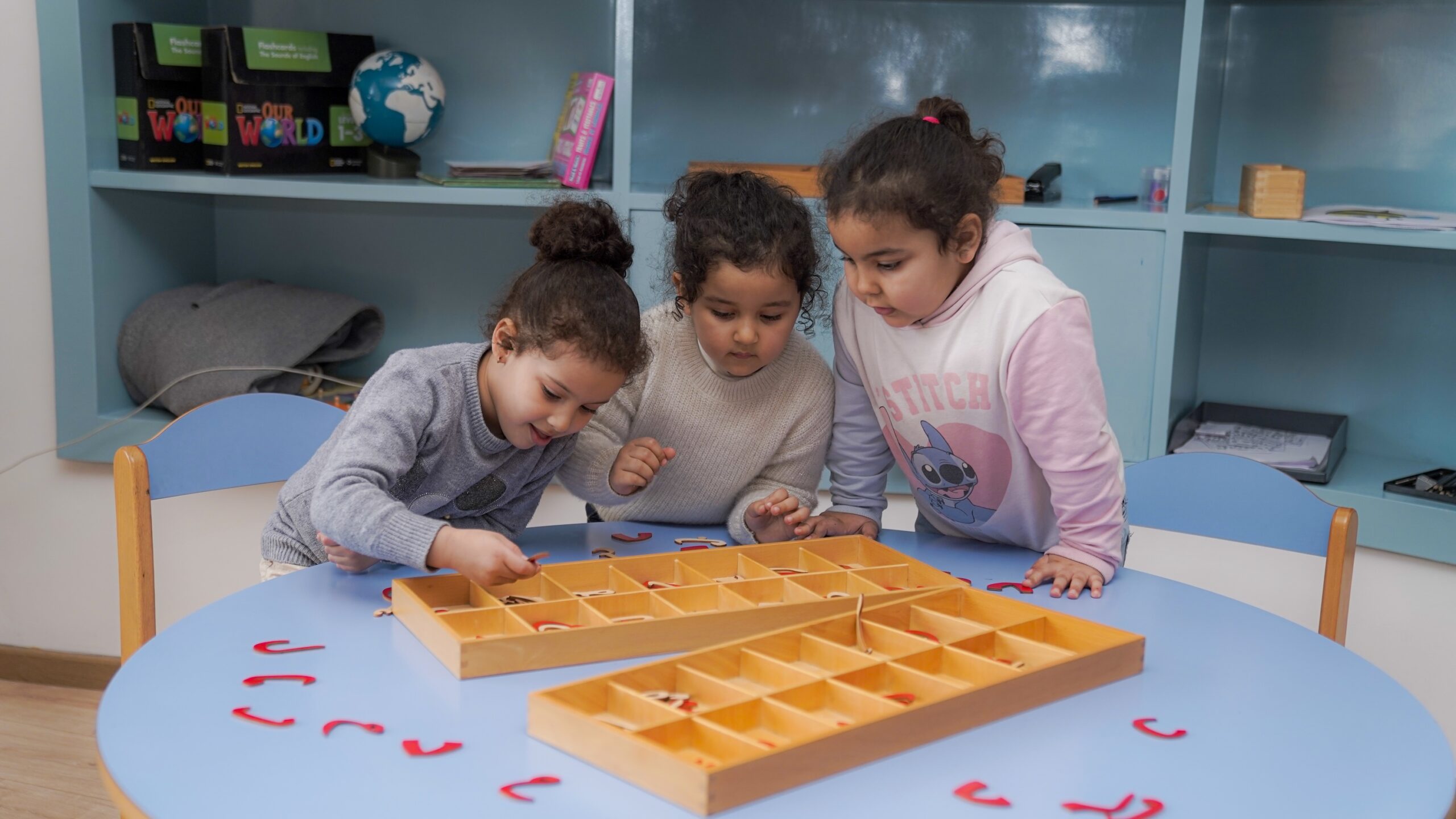
What play-based learning outcomes mean for school investors
For school investors and operators, the evidence on play-based learning outcomes translates directly into commercial advantage. Understanding this connection is the key to building the investment case for the Finland early years model.
Higher parent fees are justified by demonstrable outcomes
Parents who understand play-based learning outcomes are not just willing to pay more, they actively seek out schools that can demonstrate them. In Gulf and MENA markets, where parents are increasingly research-driven towards more progressive and modern approaches The ability to point to peer-reviewed evidence for your curriculum approach is a significant competitive advantage that directly supports premium fee positioning.
Parent retention is driven by visible outcomes
The single most powerful driver of parent retention in early years schools is the parent’s confidence that their child is developing well. Play-based learning outcomes — the confident, curious, socially capable child — are highly visible to parents who understand what they are looking at. Schools that document and communicate these outcomes effectively retain families at significantly higher rates.
Referrals are generated by outcomes parents can describe
Word-of-mouth referrals, the most cost-effective form of school marketing, require parents to be able to articulate why they chose their school and why others should too. Play-based learning outcomes give parents a compelling, evidence-backed story to tell. ‘My child loves school, is curious, resilient, and socially confident’ is a more powerful referral than any marketing campaign.
Build your business case for the Finland early years model
Request a curriculum demo from the FinlandWay® schools team. We will walk you through the commercial case, the implementation process, and what the Finland early years model looks like in a school like yours.
The honest limits of the play-based learning evidence
A credible evidence review has to acknowledge its limits. Here is what the research cannot tell you:
- Context dependence: outcomes from Finnish schools in Finland are not automatically transferable to schools in Saudi Arabia or India. Cultural context, staff capability and support, and implementation quality all affect results
- Implementation quality matters more than the model: a poorly implemented play-based curriculum will produce worse outcomes than a well-implemented traditional one. The evidence supports high-quality play-based learning, not play-based learning of any quality
- Short-term vs long-term: some play-based learning outcomes are not immediately visible to parents. Schools need to be prepared to communicate what progress looks like in a play-based environment, which is different from traditional academic benchmarks
These limitations contextualise the evidence. They are also precisely why the FinlandWay® model places such emphasis on implementation quality, staff training, pedagogical support and parent communication.
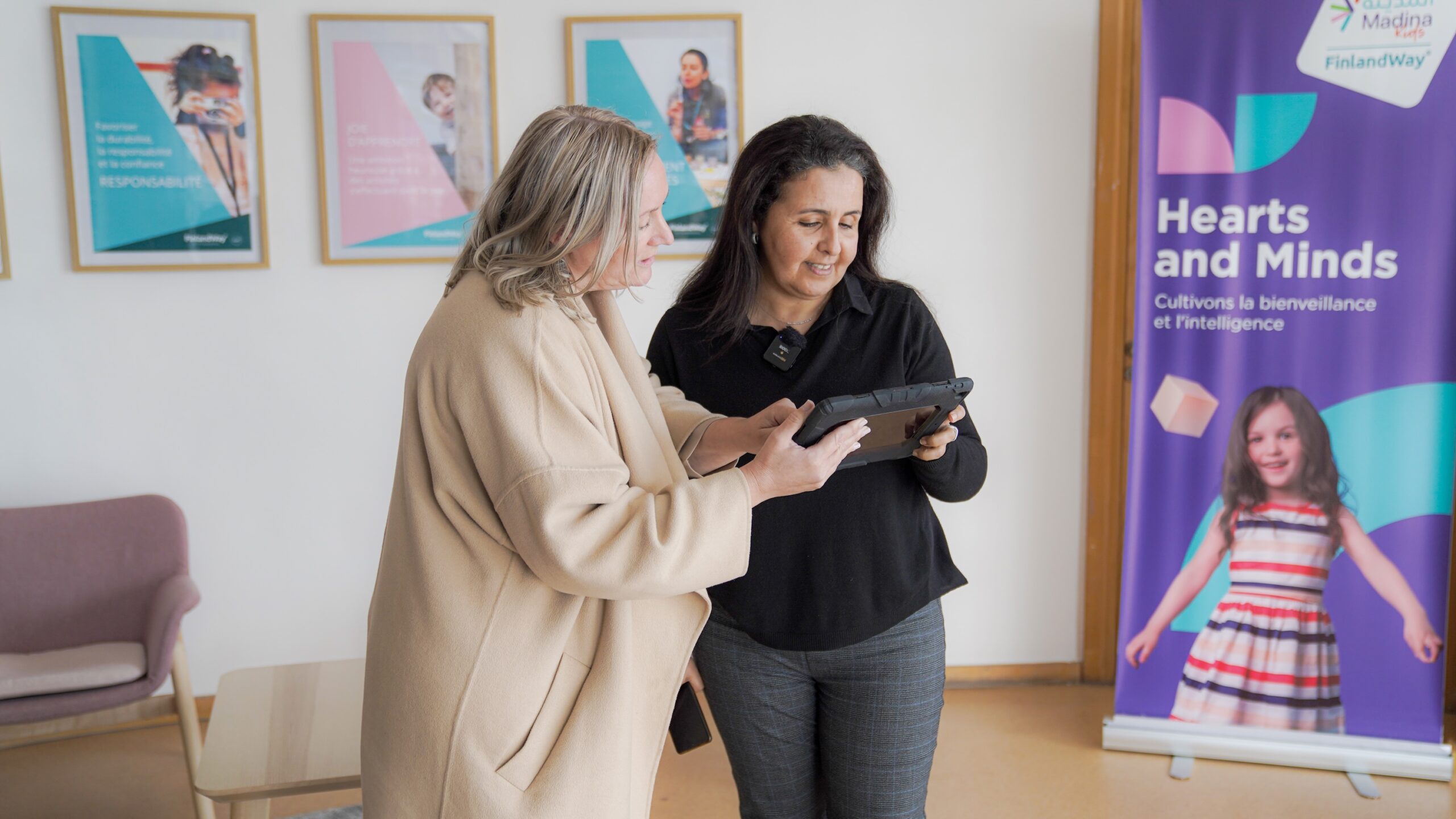
How FinlandWay® documents and communicates play-based learning outcomes
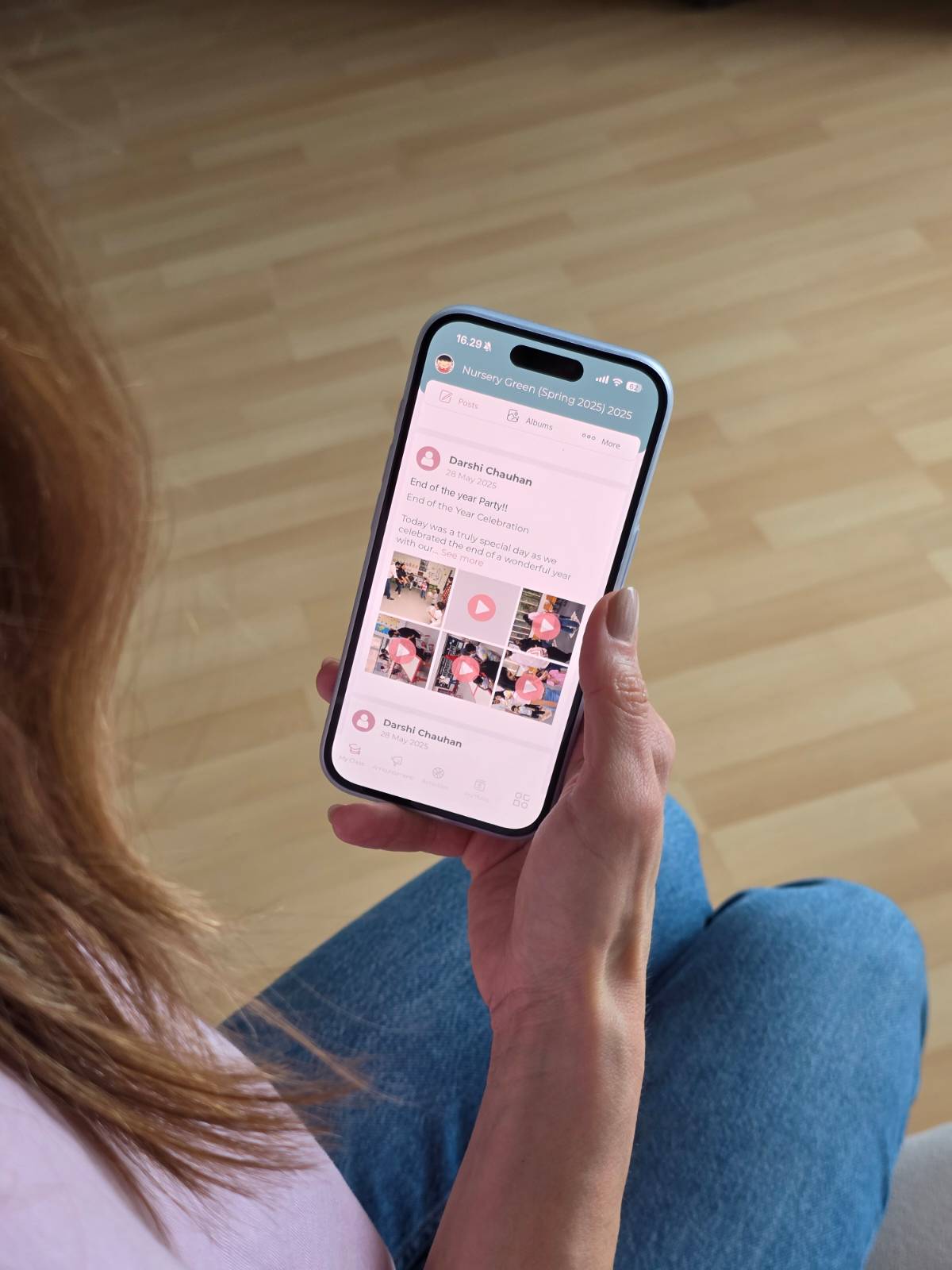
One of the most significant practical advantages of the FinlandWay® model is its approach to documentation. In the Finland early years model, assessment is observational and portfolio-based: teachers capture evidence of each child’s learning through photographs, observations, and learning stories, which are shared with parents through a digital portfolio platform.
This approach to documenting play-based learning outcomes has three commercial benefits for school operators:
- It makes outcomes visible to parents who might otherwise not recognise them and turn abstract pedagogical claims into concrete evidence
- It provides a continuous stream of positive, personalised communication with every family, building the relationship that drives retention and referrals
- It creates a documented track record of school quality that supports expansion, licensing, and franchise conversations
For the full curriculum framework, see the Finland preschool curriculum: what it delivers for schools & operators
For the broader evidence comparison, see Finland vs traditional schooling: an evidence-based comparison for school leaders
Frequently asked questions
Are play-based pedaogogy recognised by education regulators in Gulf and MENA countries?
Yes. Education regulators across the Gulf and MENA region are increasingly aligned with international early years frameworks that emphasise holistic development and play-based learning outcomes. The FinlandWay® schools team provides regulatory guidance for each market as part of the implementation process.
How do I demonstrate play-based learning outcomes to parents who expect traditional academic benchmarks?
The FinlandWay® parent engagement toolkit includes specific resources designed to help schools communicate play-based learning outcomes to parents from traditional academic backgrounds. The key is translating developmental outcomes — curiosity, resilience, social confidence, self-regulation — into language that parents recognise as preparation for primary school success.
At what age do play-based learning outcomes become measurable in standardised ways?
The most significant play-based learning outcomes become measurable in standardised ways at primary school entry — typically age 5 to 7. Early years assessment in the Finland model is portfolio-based and observational, which provides richer, more individualised evidence of development than standardised testing, even if it is less immediately comparable across schools.
Frequently asked questions
Are play-based pedagogies recognised by education regulators in Gulf and MENA countries?
Yes. Education regulators across the Gulf and MENA region are increasingly aligned with international early years frameworks that emphasise holistic development and play-based learning outcomes. The FinlandWay® schools team provides regulatory guidance for each market as part of the implementation process.
How do I demonstrate play-based learning outcomes to parents who expect traditional academic benchmarks?
The FinlandWay® parent engagement toolkit includes specific resources designed to help schools communicate play-based learning outcomes to parents from traditional academic backgrounds. The key is translating developmental outcomes — curiosity, resilience, social confidence, self-regulation — into language that parents recognise as preparation for primary school success.
At what age do play-based learning outcomes become measurable in standardised ways?
The most significant play-based learning outcomes become measurable in standardised ways at primary school entry — typically age 5 to 7. Early years assessment in the Finland model is portfolio-based and observational, which provides richer, more individualised evidence of development than standardised testing, even if it is less immediately comparable across schools.