
Holistic development in schools is the term that separates serious early years operators from those still running on an outdated model. For school owners and investors who want to build a commercially sustainable, future-proof education business, understanding what holistic development actually means and how evidence-based curriculum models deliver is not optional. It is the foundation of every premium fee, every retained family, and every referral that sustains a school’s revenue over the long term. This article sets out what holistic development in schools involves, why evidence-based models are the only reliable way to achieve it, and how the FinlandWay® framework delivers it in practice.
| Related: For the full future-ready schools framework, see future-ready schools: how the FinlandWay® model builds 21st-century skills |
Holistic development in schools: what operators need to understand
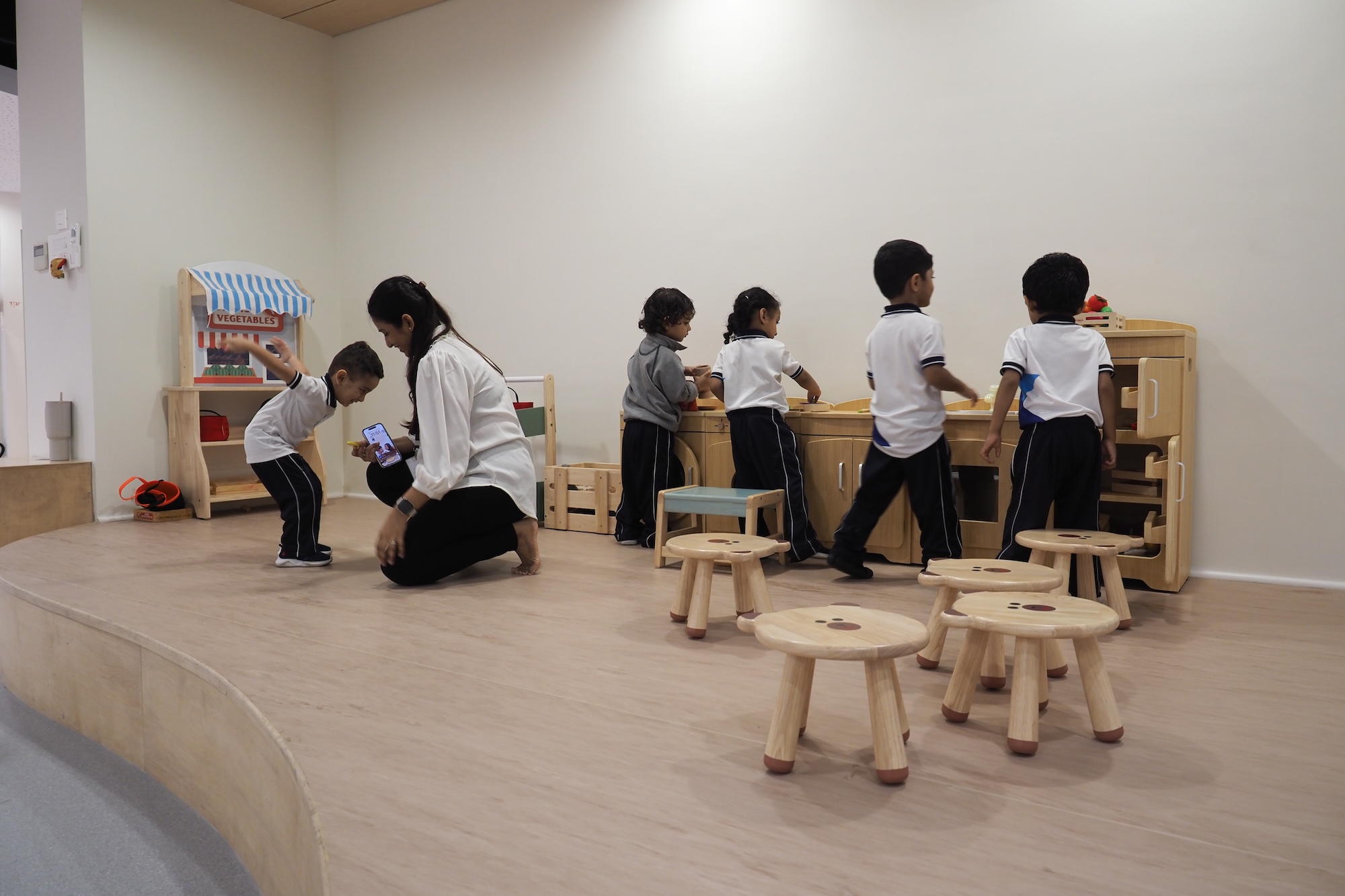
Holistic development in schools refers to the simultaneous, integrated development of a child across five domains: cognitive, social, emotional, physical, and creative. The word ‘holistic’ means that these domains are not treated as separate subjects to be scheduled and assessed in isolation. They are understood as interconnected dimensions of a single developing person, and the curriculum is designed to develop them together.
In practice, this means:
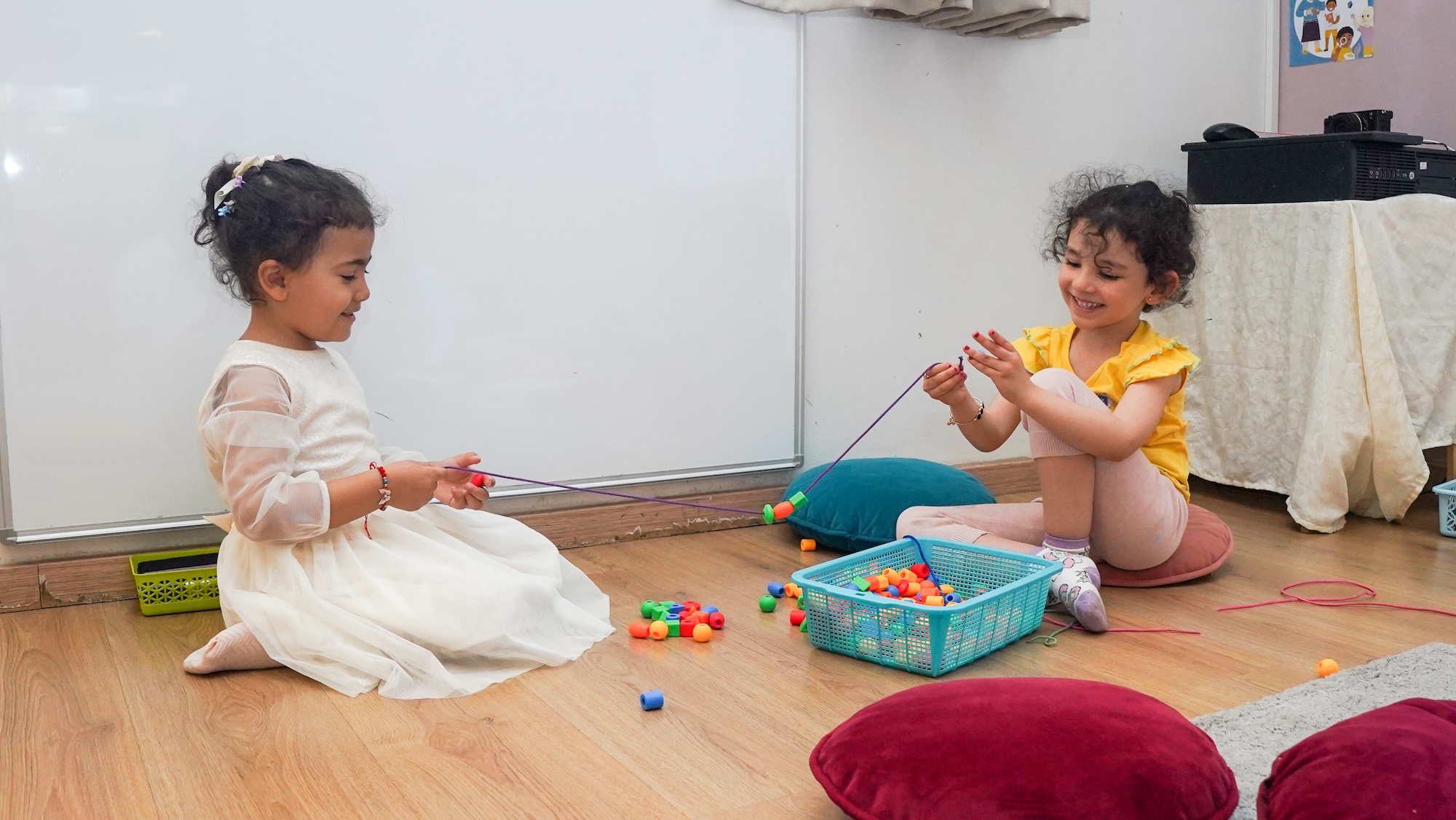
- A child building a structure with blocks is developing spatial reasoning (cognitive), negotiating with peers (social), managing frustration when it falls (emotional), developing fine motor control (physical), and imagining and creating (creative) — all simultaneously, within a single activity
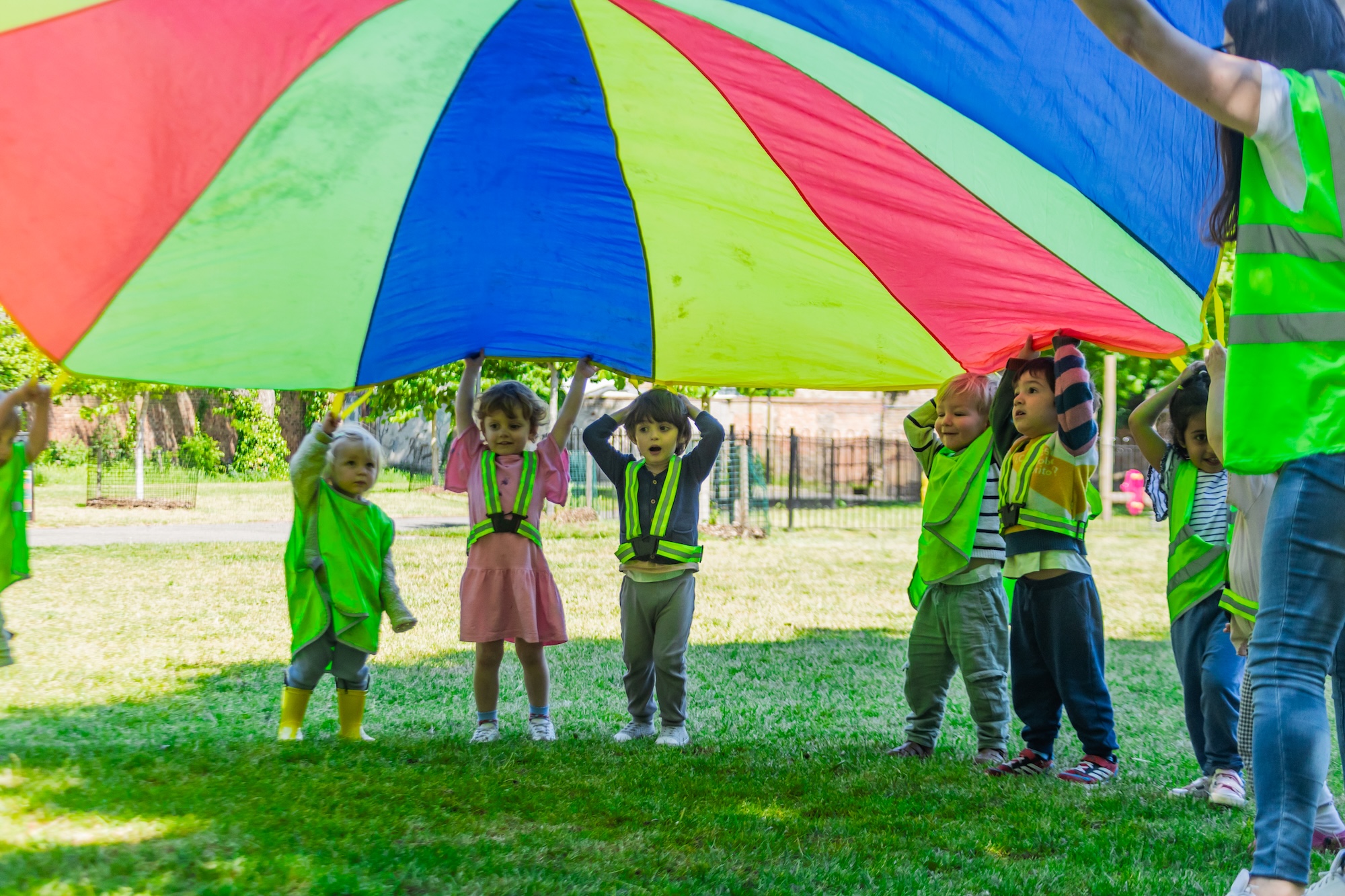
- A child engaged in a nature investigation is developing scientific thinking (cognitive), collaborating with classmates (social), regulating excitement and curiosity (emotional), moving through outdoor space (physical), and documenting their observations through drawing (creative)
- A child listening to and retelling a story is developing language and comprehension (cognitive), connecting with others through narrative (social), exploring emotional themes safely (emotional), using gesture and voice (physical), and generating creative interpretations (creative)
The significance for school operators is that holistic development is not a curriculum add-on but a fundamentally different model of what learning is, and it requires a fundamentally different kind of school to deliver it.
Why evidence-based models are the only reliable path to holistic development
Achieving genuine holistic development requires a curriculum framework that is designed from the outset to integrate all five domains simultaneously, not to add social-emotional learning as a pastoral programme on top of an academic content curriculum.
Evidence-based models achieve holistic development reliably for three structural reasons:
1. The evidence base defines what development actually is
Curriculum frameworks built on child development research start from a clear, evidence-informed model of how children develop and what they need at each stage. This means that every curriculum decision — what activities to include, how to structure the day, what the environment should look like — is grounded in an understanding of development rather than tradition, market pressure, or regulatory compliance.
2. The evidence base provides a consistent quality standard
Schools that implement evidence-based models can be assessed against a consistent quality standard that exists independently of the school’s own claims. This is valuable for operators managing multiple sites, for investors conducting due diligence, and for regulators assessing curriculum quality. An evidence-based model of quality can be verified externally.
3. The evidence base continues to develop
Evidence-based curriculum models are updated as the research develops. Schools implementing the FinlandWay® curriculum receive annual curriculum updates that incorporate the latest child development research, ensuring that holistic development practice remains current rather than calcifying into tradition.
How FinlandWay® delivers holistic development across all five domains
| Development domain | What it involves | How FinlandWay® develops it | Observable outcome |
|---|---|---|---|
| 1 Cognitive |
Language development, mathematical thinking, scientific enquiry, problem-solving, memory, attention, and executive function. | Phenomenon-based learning, structured enquiry, mathematical investigation through real-world activity, documentation and reflection. | Children who think critically, question purposefully, and approach problems with curiosity and persistence. |
| 2 Social |
Collaboration, communication, conflict resolution, perspective-taking, group membership, and peer relationships. | Zone-based learning, group projects, collaborative investigations, community-building rituals, and peer documentation. | Children who work effectively with others, listen actively, and navigate social complexity with confidence. |
| 3 Emotional |
Emotional awareness, self-regulation, empathy, resilience, and emotional expression. | Explicit social-emotional learning woven throughout the curriculum, strengths-based assessment, regulation support rather than punishment. | Children who understand and manage their own emotions, empathise with others, and recover from setbacks. |
| 4 Physical |
Gross motor development, fine motor control, spatial awareness, physical confidence, and health literacy. | Daily outdoor learning, physical challenge embedded in curriculum activities, natural materials that develop fine motor control through use. | Children who are physically confident, coordinated, and comfortable in their bodies and the natural environment. |
| 5 Creative |
Imagination, artistic expression, creative problem-solving, aesthetic awareness, and representational thinking. | Open-ended art materials, construction challenges, dramatic play, music, movement, and documentation through multiple representational media. | Children who generate novel ideas, take creative risks, and express their thinking through diverse media. |
The commercial case for holistic development in early years schools
For school operators, holistic development is also a commercial strategy. Here is why it drives better business outcomes:
It produces the child that parents are actually looking for
Parents in aspirational markets are increasingly looking for schools that will produce a child who is confident, curious, socially capable, resilient, and creative. Holistic development is the curriculum answer to what these parents are asking for. Schools that can credibly claim and demonstrate holistic development outcomes attract the most commercially valuable parent segment.
It generates the most powerful word-of-mouth
When a parent says to another parent: ‘My child has come alive since joining this school. They are confident, they love learning, they have great friends,’ they are describing holistic development outcomes. This kind of referral is qualitatively more powerful than any marketing campaign and is the primary growth driver for schools that genuinely deliver it.
It is the hardest thing for a competitor to replicate
A school can copy a competitor’s marketing language, its uniform, its facilities, or its fee structure in weeks. It cannot replicate a genuine holistic development culture in months or years. This culture — embedded in teacher practice, environment design, parent relationships, and curriculum philosophy — is the most durable competitive advantage available to an early years school.
For the evidence on outcomes, see play-based learning outcomes: the evidence school investors need to see
For the positive pedagogy dimension, see positive pedagogy as a school differentiator: what it means and why it matters
Build a holistic development school with FinlandWay®
Request a curriculum demo from the FinlandWay® schools team. We will show you how holistic development across all five domains is built into every element of the Finland early years curriculum.
No commitment required — we respond within one business day
Frequently asked questions
How do you assess holistic development if it cannot be measured by standardised tests?
The FinlandWay® model uses portfolio-based, observational assessment that captures evidence of development across all five domains simultaneously. Each child’s learning portfolio includes photographs, teacher observations, learning stories, and developmental notes that document growth across cognitive, social, emotional, physical, and creative dimensions. This assessment approach is richer and more individualised than standardised testing, and it produces documentation that is genuinely meaningful to parents, teachers, and school leaders.
Is holistic development compatible with school readiness requirements?
Yes. The evidence consistently shows that children who experience genuine holistic development in the early years are more school-ready – not less – than children from narrowly academic early years programmes. The self-regulation, social skills, language development, and learning persistence that holistic development produces are precisely the foundations that primary schools most value in their incoming pupils.
Can holistic development be implemented in a school with a large class size?
Class size is a real constraint on holistic development quality. Zone-based learning with small group and individual activity – the FinlandWay® classroom structure – requires a teacher-to-child ratio that allows genuine observation and relationship. The FinlandWay® implementation team advises on optimal group sizes for each age range during the school design process.
How does holistic development support children with additional needs?
Holistic development models are generally better suited to children with additional needs than narrowly academic models, because they start from each child’s actual developmental position rather than from a fixed curriculum content expectation. The observational assessment approach identifies developmental needs early and allows curriculum planning to respond to them individually.
