
School principals making classroom technology purchasing decisions in 2026 face two competing pressures. On one side, the education technology market is saturated with products claiming to transform learning outcomes. On the other hand, the evidence from early years education research consistently shows that the quality of human interaction, either between teacher and child, or between child and child, is a far more significant determinant of outcomes than any technology tool. As cherry on the top, parents want to limit their children’s screentime to a minimum.
This guide is not an argument against classroom technology. It is a framework for thinking about it clearly and helps you to understand what technology genuinely supports learning in early years settings, what it does not, and how to make purchasing decisions that serve your curriculum rather than distract from it. It is written from within the FinlandWay® School’s Finland model perspective, where technology is treated as a tool in service of pedagogy, not a substitute for it.
| Related: For the full environment design guide, see modern learning environment design: what school owners need to know |
The right question to ask about classroom technology
Most technology purchasing decisions in schools are driven by the wrong question. The question most commonly asked is: what technology is available and what does it do? The right question is: what does our curriculum framework require, and does this technology serve that requirement?
In a Finland-model early years setting, the curriculum is built around play-based learning, child-led enquiry, social interaction, and physical engagement with the environment. This framework places specific constraints on what technology is appropriate and how it should be used:
- Technology that replaces human interaction or reduces physical engagement is generally not appropriate for early years settings
- Technology that supports teacher observation, documentation, and communication with parents has high value
- Technology that enables children to create, record, and share their learning has moderate value when used purposefully
- Screen-based content consumption, such as videos, apps and digital worksheets, has minimal value in a play-based early years context and should be used sparingly if at all
This framework does not make technology decisions for you, but it does provide a consistent evaluative lens: does this tool serve the pedagogy, or does it serve the technology provider?
Technology that genuinely supports the Finland curriculum model
Within the FinlandWay® framework, there are specific categories of technology that provide clear pedagogical value when used well.
1. Documentation and observation tools
The Finland model places observation and documentation at the centre of assessment practice. Digital tools that allow teachers to capture observations, photographs, and learning stories — and share them efficiently with parents and the wider team — genuinely support the curriculum.
- Portfolio and learning journal apps: allow teachers to build digital learning portfolios for each child, with photographs, annotations, and developmental observations. Shared with parents, these replace paper report books with real-time, evidence-rich communication
- Staff communication platforms: secure, school-managed platforms that allow the teaching team to share observations, planning notes, and curriculum reflections between sessions
2. Large-format display technology
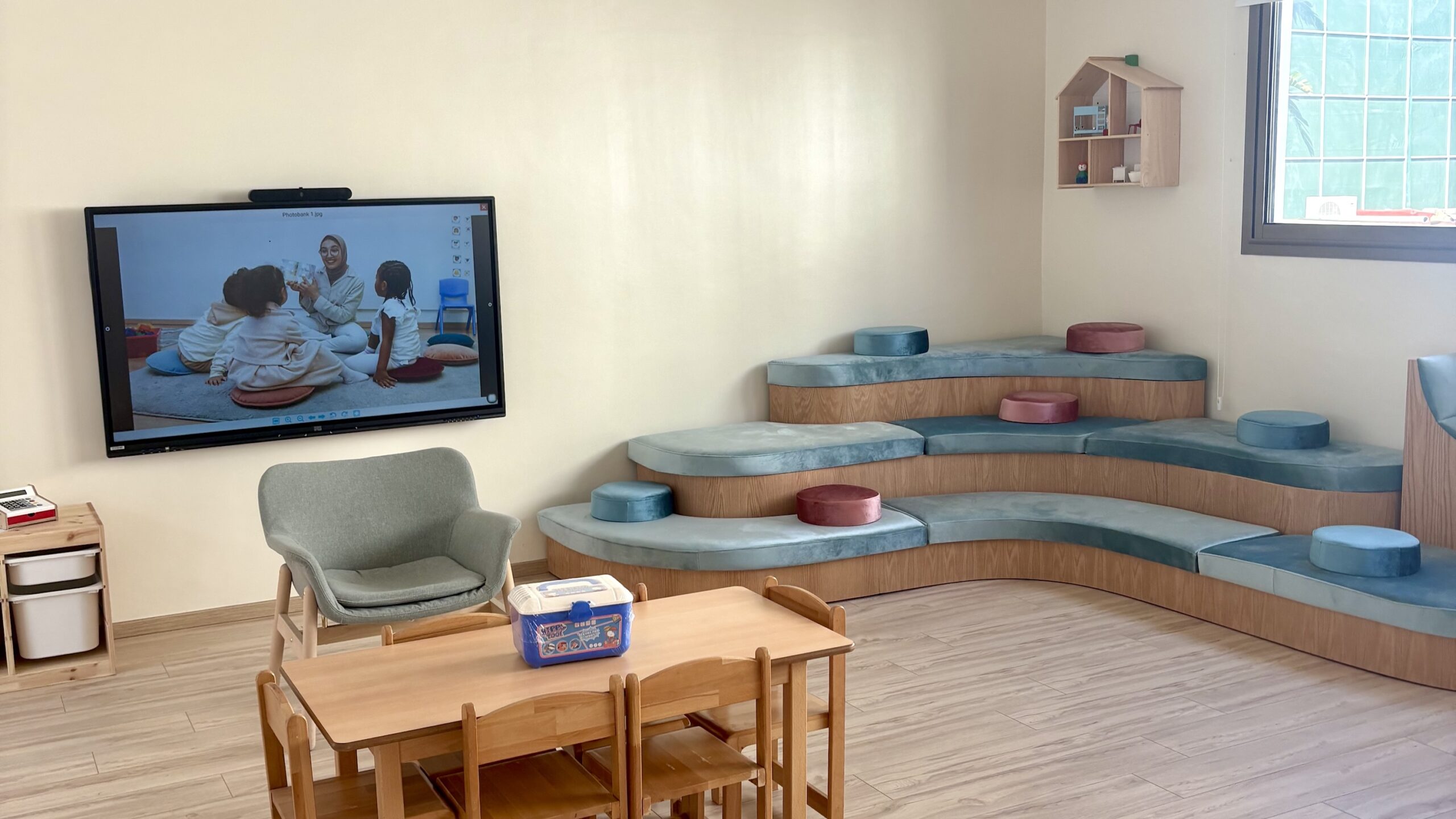
A single large-format display screen, used as a documentation and community tool rather than an instructional screen, has genuine value in an early years classroom. It can display children’s work, learning documentation, and project records making learning visible to the whole community and giving children a sense of ownership over their environment.
The key constraint: the display should not be used for passive content consumption, such as videos, animations, or digital worksheets. Its purpose is documentation and community, not instruction.
3. Audio recording and playback
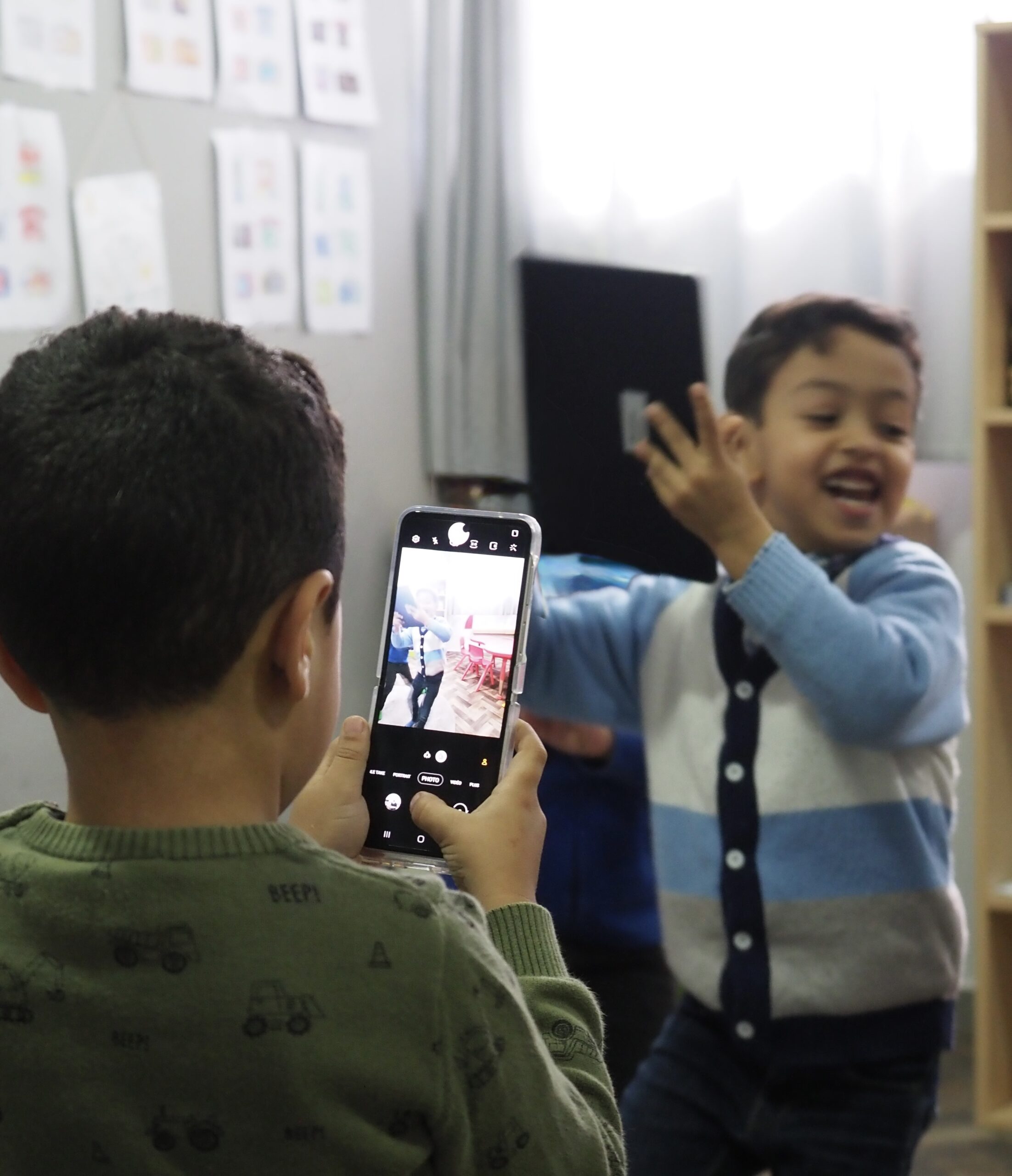
Simple, child-operable audio recording tools — voice recorders, microphones, or tablet-based recording apps — support language development, storytelling, and self-expression in ways that are genuinely aligned with the Finland curriculum. Children can record their own stories, songs, and observations, which are then used as documentation and play materials. Teachers can use the children’s recordings to enrich the learning and share them with families.
4. Parent communication technology
Technology that strengthens the school-parent relationship has high value in any early years model. Secure messaging platforms, learning portfolio apps, and digital newsletters that keep parents informed and engaged with their child’s learning directly support the parent retention and referral outcomes that school owners depend on.
Technology to approach with caution in early years settings
The following categories of technology are widely marketed to early years schools but have limited or contested evidence of benefit in play-based learning contexts.
| Technology category | Common claim | Finland model perspective |
|---|---|---|
| Educational apps and tablets for children | Interactive apps develop early literacy, numeracy, and digital skills | Screen-based interaction displaces physical, social, and sensory learning. In early years, hands-on experience with real materials consistently outperforms digital equivalents for developmental outcomes. Limit to short, purposeful, teacher-facilitated use if used at all. |
| Interactive whiteboards for early years | Increases engagement and supports whole-class instruction | Whole-class instruction is not a feature of the Finland early years model. A large interactive whiteboard encourages teacher-fronted practice, which is counter to the child-led, zone-based learning approach. |
| Coding and robotics kits for under-fives | Develops computational thinking and problem-solving from an early age | Computational thinking can be developed more effectively through physical, unplugged activities at this age. Coding kits for under-fives are premature and displace more developmentally appropriate activities. Appropriate from age 5+, with careful facilitation. |
| AI-powered assessment tools | Automates observation and learning analysis, reducing teacher workload | Observation in the Finland model is a skilled professional practice, not an administrative task. AI assessment tools risk reducing observation to data collection rather than deepening teacher knowledge of each child. |
| Virtual reality and immersive technology | Creates rich, engaging learning experiences | Highly inappropriate for early years. The sensory and physical world of the early years classroom is richer than any virtual environment. VR displaces real-world exploration and social interaction, which are the primary learning mechanisms at this age. |
A framework for evaluating any classroom technology purchase
Before approving any technology purchase for your school, apply the following five-question framework:
- Does it serve the teacher or the child? Technology that reduces teacher administrative burden to free up time for direct child interaction is more valuable than technology that is primarily a child-facing tool
- Does it replace or enhance physical interaction? Technology that replaces hands-on, sensory, or social learning is almost never appropriate in early years. Technology that documents, extends, or communicates about physical learning is frequently valuable
- Can the teacher use it confidently without significant training? Complex technology that requires substantial teacher training to operate effectively competes with time that should be spent on professional development in pedagogy
- Does it support parent engagement? Technology that strengthens the school-parent relationship earns its place. Technology that creates a barrier between home and school does not
- Is there evidence it improves outcomes in comparable settings? Vendor testimonials are not evidence. Peer-reviewed research or documented outcomes from comparable schools, preferably in similar cultural contexts, should inform significant purchases

What the FinlandWay® model recommends for 2026
The FinlandWay® technology recommendations for early years schools in 2026 are deliberately minimal. The Finland curriculum does not require significant technology investment, the investment focuses on teacher capability, environment quality, and curriculum coherence.
The recommended technology stack for a FinlandWay® early years school is:
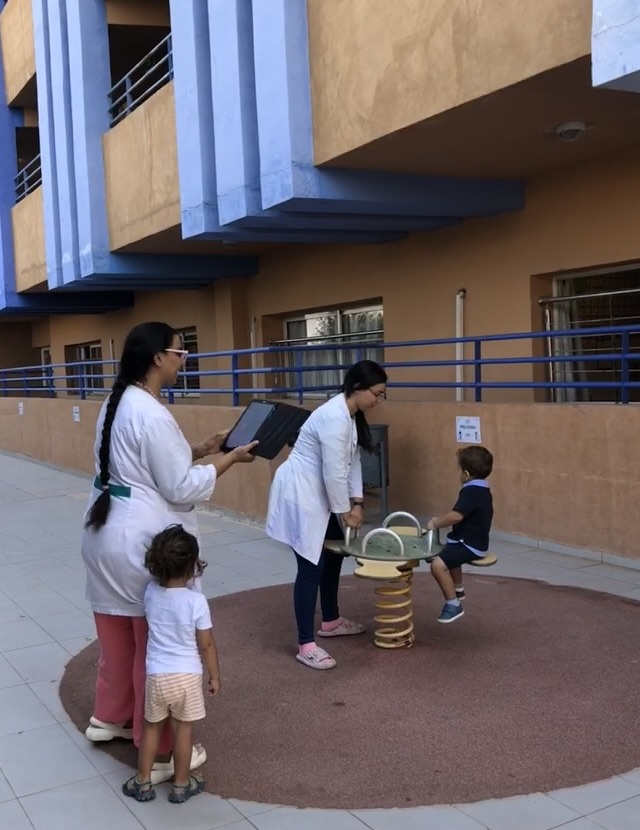
- One tablet or smartphone per classroom, used exclusively for observation and documentation
- One learning portfolio and family communication app subscription, used to share learning documentation with parents
- One large-format display screen per classroom, used for documentation display and community communication
- A secure staff communication platform for team observation-sharing and planning
This is a small, purposeful technology footprint. It costs less than most schools currently spend on technology, and it serves the curriculum more effectively than a larger, more complex technology infrastructure.
For the broader environment design framework, see modern learning environment design: what school owners need to know
For the full curriculum adoption guide, see adopting the Finland curriculum in your school: a guide for principals
See how the Finland curriculum approaches technology
Request a curriculum demo from the FinlandWay® schools team and see the full learning environment — including how technology is integrated purposefully rather than dominantly.
Frequently asked questions
Do children in FinlandWay® schools learn digital skills?
Yes, but in an age-appropriate and purposeful way. Children under five develop digital literacy most effectively through using technology as a tool for real purposes, for example taking photographs, recording stories, and documenting their work, rather than through structured digital skills programmes. Formal digital skills education is introduced progressively as children move into older age groups.
Parents expect schools to use technology. How do we manage this expectation?
Parent expectations around technology are often driven by marketing rather than evidence. Schools that implement the FinlandWay® approach find that parents who understand the pedagogy and who see the quality of the documentation and communication coming from the school become strong advocates for the minimal technology approach. The parent engagement toolkit includes guidance on communicating the school’s technology philosophy.
What technology do FinlandWay® partner schools actually use?
Most FinlandWay® partner schools use a tablet-based learning portfolio app for documentation and parent communication, a large-format display screen for classroom documentation, and a staff communication platform. Beyond this, technology use varies by context and age group.
Is there a recommended learning portfolio app?
The FinlandWay® schools team can advise on learning portfolio apps that are compatible with the documentation approach and available in your market. Recommendations are provided as part of the implementation support process.
How much should we budget for technology?
In most FinlandWay® implementations, the total annual technology budget is significantly lower than the market average for comparable schools. The primary investments are staff devices for observation, a portfolio app subscription, and a display screen. Exact costs depend on your market and existing infrastructure.